





EPDM vs SBR: Which Rubber Granule Should You Choose?
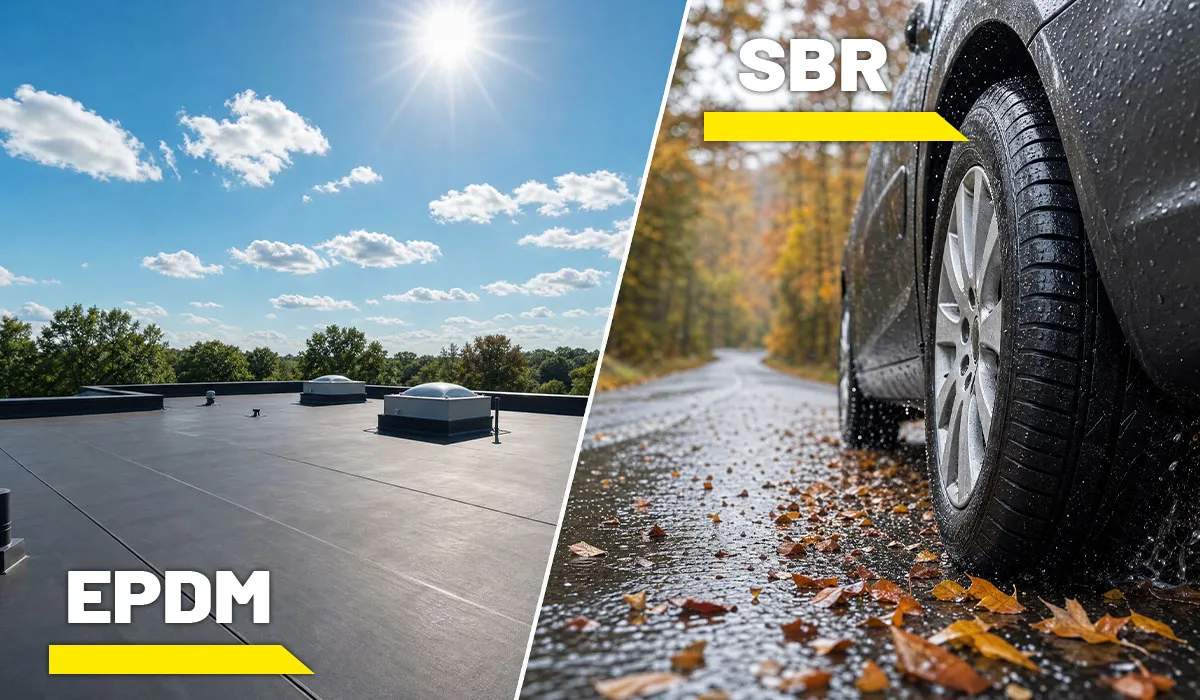
Almost every rubber sports surface in the world — running tracks, multipurpose courts, playgrounds, walking lanes — is built from one of two rubber granules, or from a combination of both: SBR and EPDM. They look similar in a bucket. They behave very differently on site, over ten years, under sun and rain.
Choosing between them is not a question of which material is “better.” It is a question of where the granule sits in the build-up, what the surface has to survive, and what the facility is expected to look like five summers from now. This guide breaks down the difference so you can specify the right material for your project.
What Is SBR?
SBR stands for Styrene-Butadiene Rubber. In the flooring industry, SBR granules are produced by shredding and grading end-of-life vehicle tires into uniform particles, most often in the 1–4 mm range for flooring applications.
Because it comes from a recycled stream, SBR is inherently black. It carries the carbon black and reinforcing fillers of the original tire compound, which is exactly what makes it tough: high tensile strength, excellent elastic recovery and very good resistance to mechanical wear.
Its two defining commercial advantages are cost and sustainability. SBR is by a wide margin the more economical of the two granules, and every square metre of SBR base layer diverts scrap tire material from landfill.
Its defining limitation is exposure. Left uncovered outdoors, SBR is vulnerable to ultraviolet radiation and ozone. Over time the surface oxidises, the binder chalks, and the layer becomes brittle at the top. This is why SBR is rarely specified as a finished outdoor wearing course on its own.

What Is EPDM?
EPDM stands for Ethylene Propylene Diene Monomer. Unlike SBR, it is not a recycled by-product — it is a virgin synthetic rubber manufactured specifically for demanding outdoor use, with colour pigment compounded through the entire granule rather than applied to the outside.
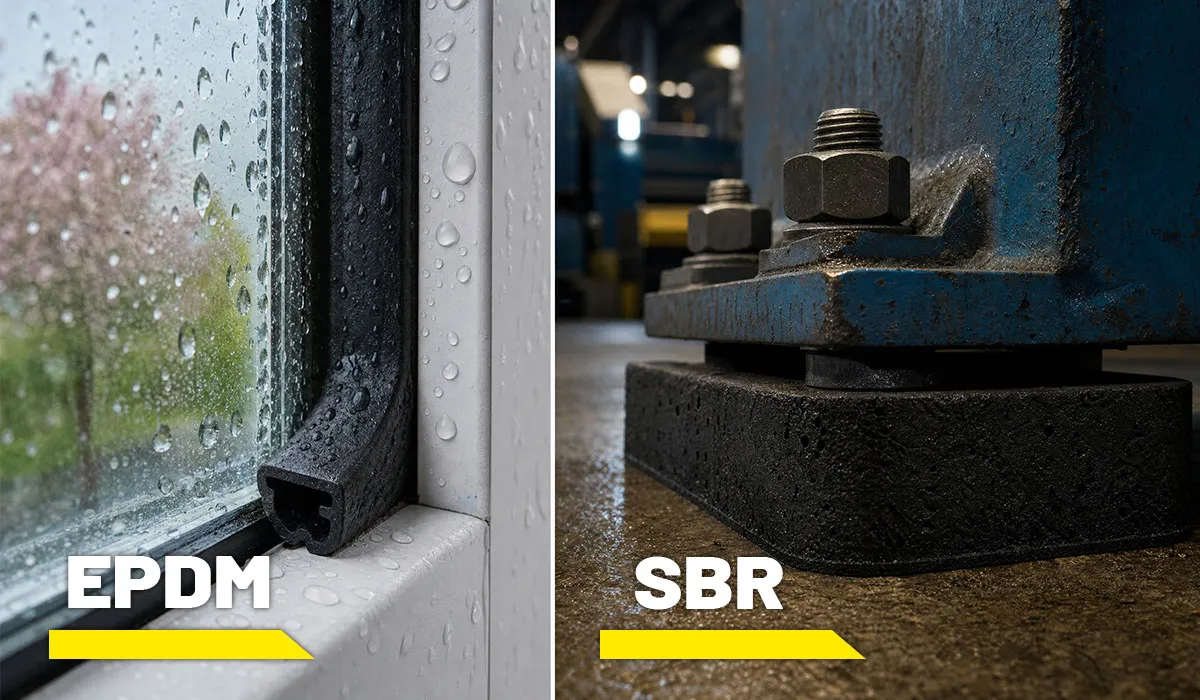
That single production difference drives everything else. Because the pigment runs through the body of the granule, an EPDM surface does not lose its colour as it wears; abrasion simply exposes more of the same pigmented rubber underneath. And because the polymer backbone is saturated, EPDM is intrinsically resistant to UV, ozone and weathering. It does not need to be protected from the sun. It is designed for it.
EPDM is available in a broad palette — the reds, blues, greens and greys you see on athletics tracks and playgrounds — and typically in 1–4 mm granulation for wet-pour surfaces.
The trade-off is cost. As a virgin engineered material, EPDM carries a materially higher price per kilogram than recycled SBR.

EPDM vs SBR: Head-to-Head Comparison
| Criterion | SBR | EPDM |
|---|---|---|
| Origin | Recycled vehicle tires | Virgin synthetic rubber |
| Colour options | Black only | Full pigmented palette |
| Colour stability | Fades and greys when exposed | Pigment throughout, highly colourfast |
| UV & ozone resistance | Low — degrades under exposure | High — engineered for outdoor use |
| Mechanical strength | Very high | High |
| Shock absorption | Excellent | Excellent |
| Outdoor service life as wearing course | Shorter | Long, with minimal appearance loss |
| Relative material cost | Low | Significantly higher |
| Sustainability profile | Diverts end-of-life tires | Long service life, low replacement rate |
| Typical position in build-up | Base / elastic layer | Top / wearing course |
Where SBR Performs Best
SBR is the correct specification whenever the granule is protected from direct sunlight or where colour is not part of the brief.
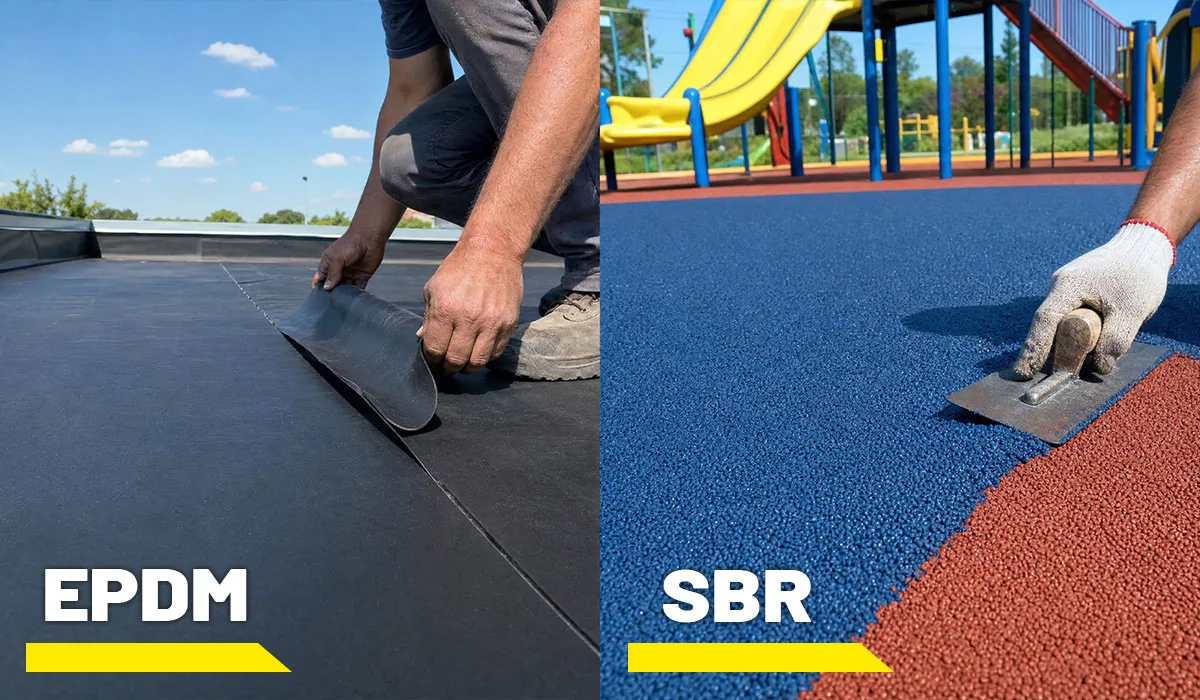
Elastic base layers. In a sandwich-system running track, the lower layer does the shock absorption work while the top layer takes the wear. SBR is ideal here — it delivers the resilience at a fraction of the cost, and it is sealed beneath the wearing course, so UV never reaches it.
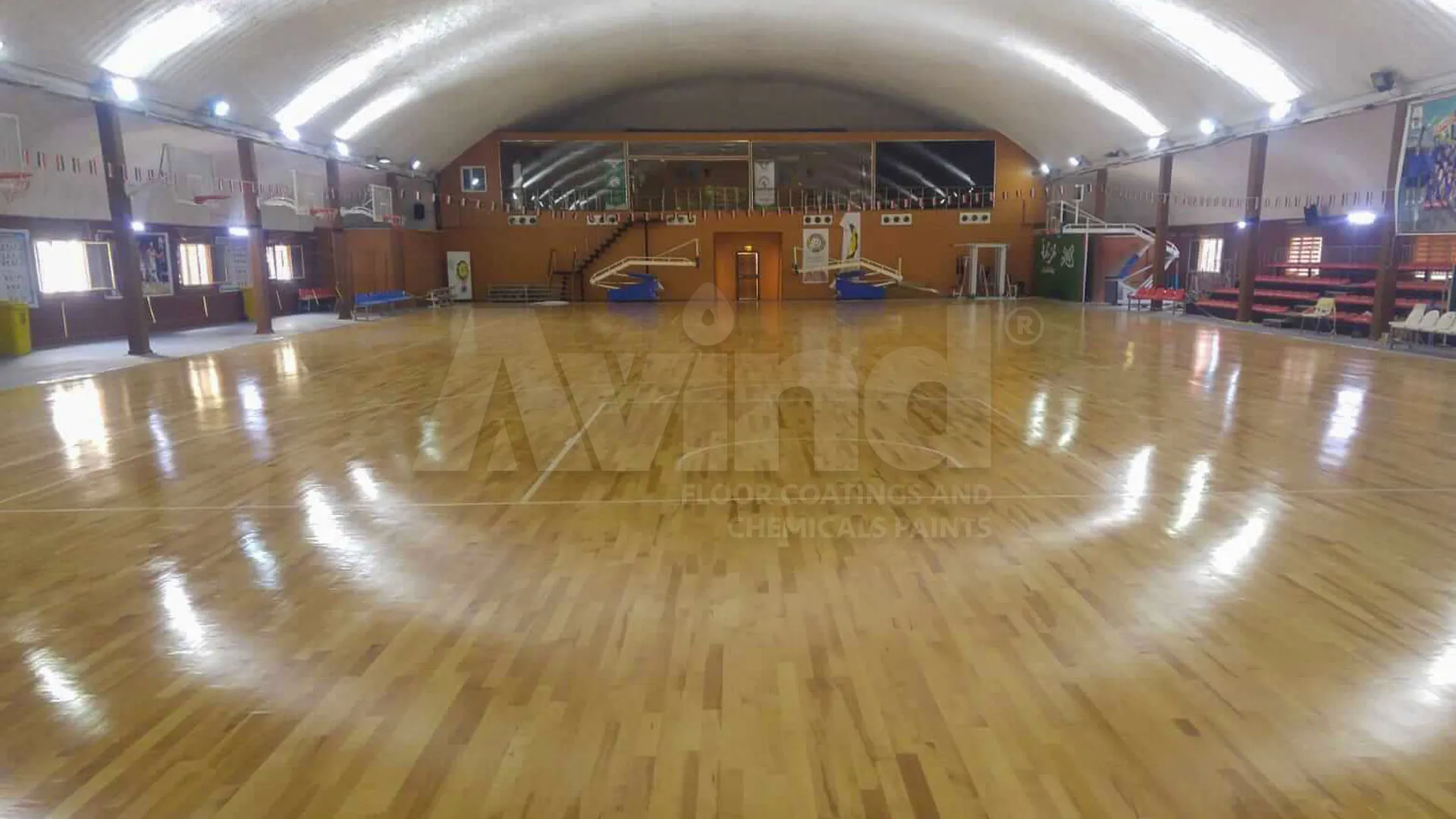
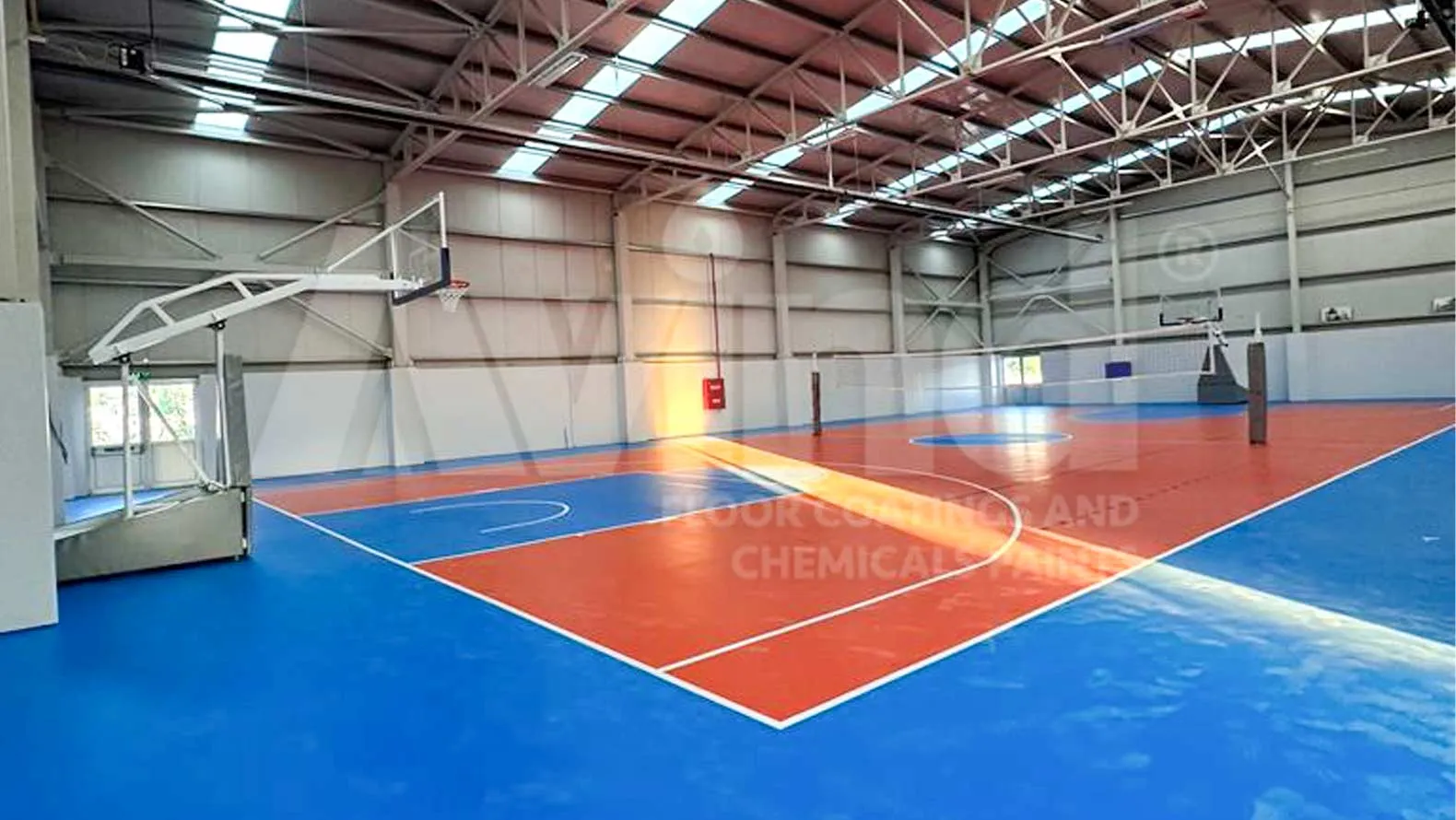
Indoor facilities. Inside a sports hall, UV exposure is a non-issue. SBR underlayments provide impact attenuation and acoustic damping beneath PU or vinyl finishes.
Budget-driven and large-area projects. On municipal walking lanes, school yards and back-of-house areas where the specification prioritises safety and durability over appearance, SBR delivers the performance the project actually needs.
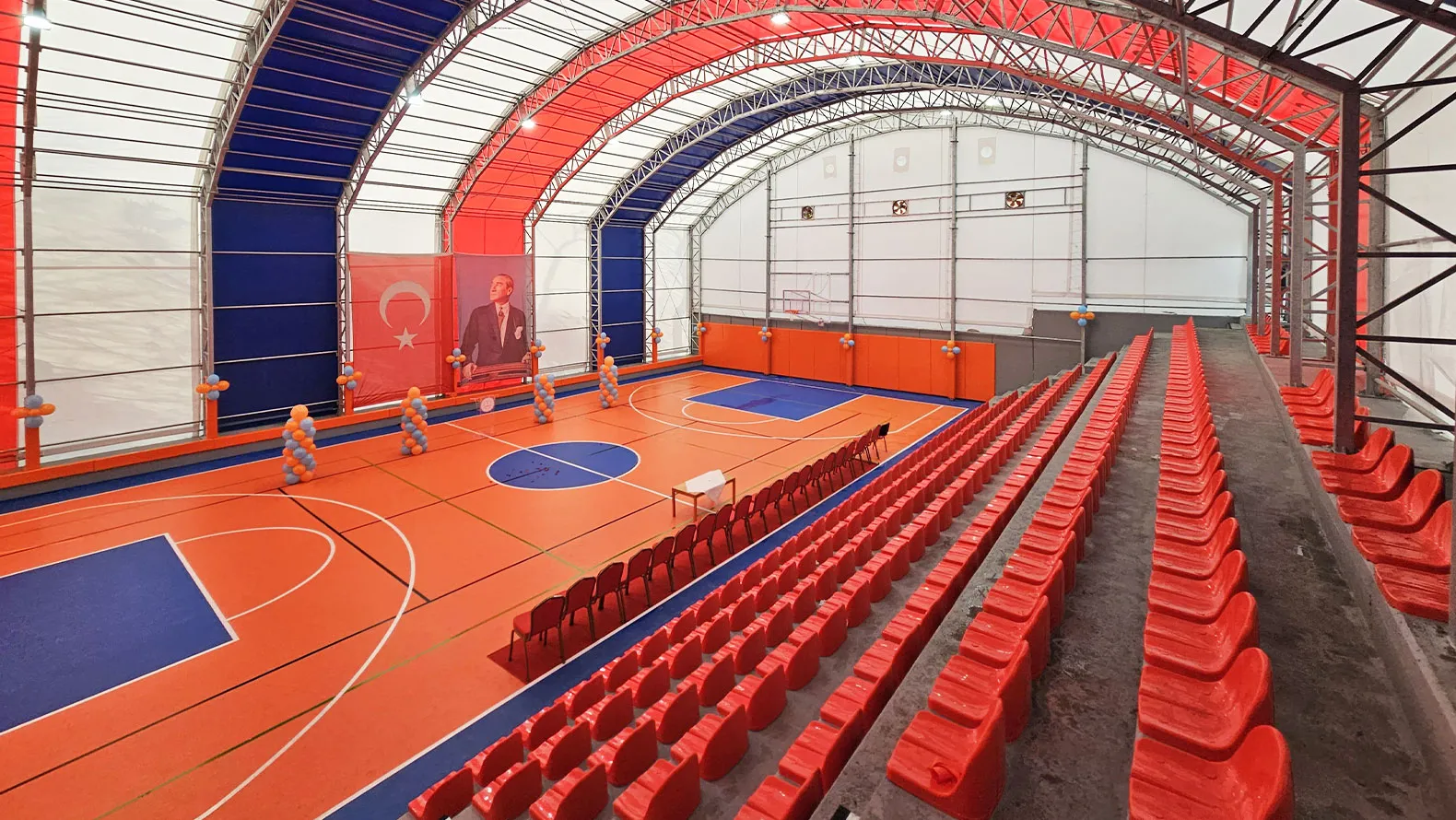
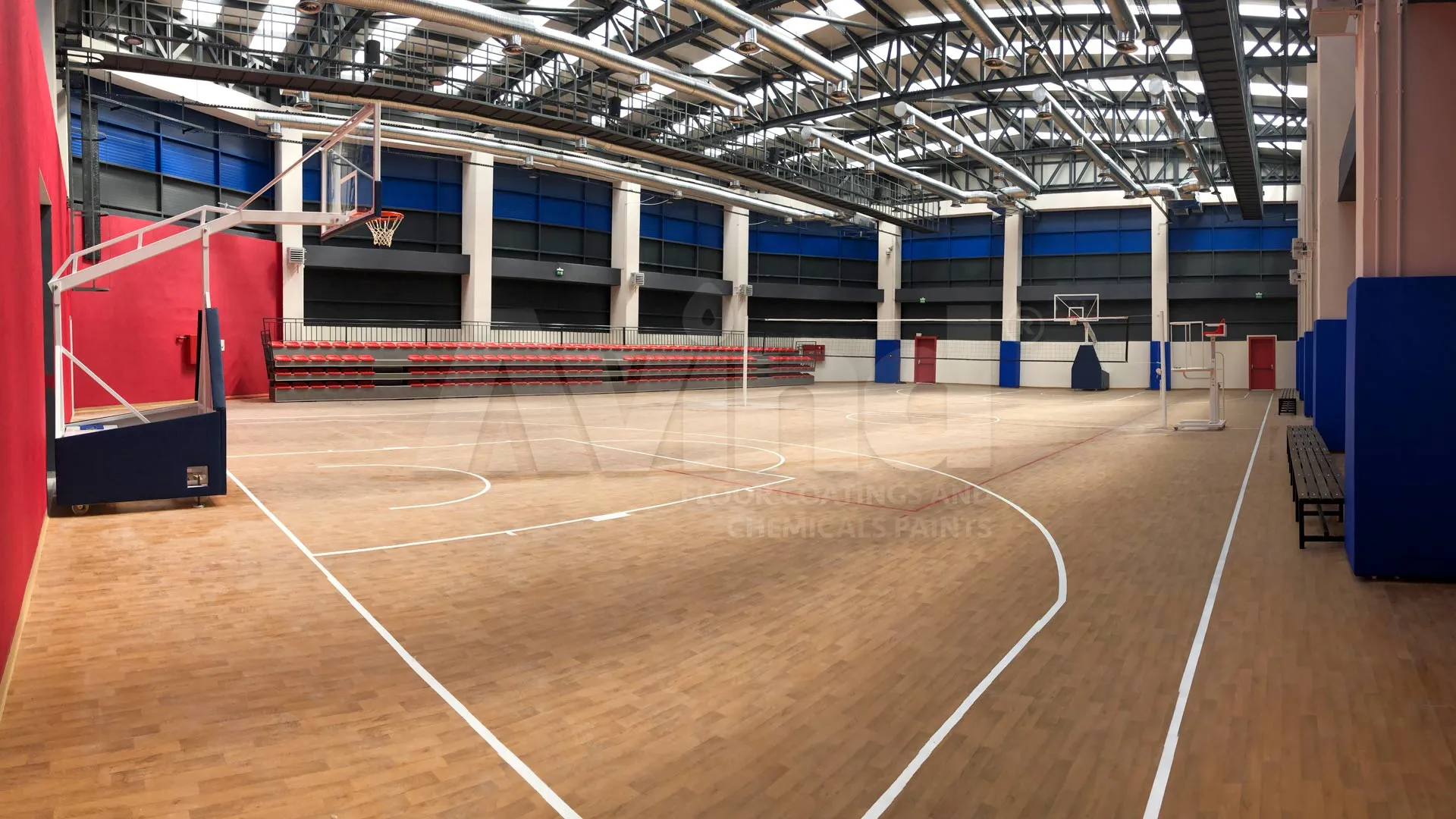
Avind SW - Sandwich System · Indoor Sports Hall Flooring
Where EPDM Performs Best
EPDM belongs wherever the surface is both visible and exposed.
Children’s playgrounds. These surfaces are outdoors, colour-coded by design, and in constant contact with children. EPDM’s colourfastness keeps the installation looking new for years, and as a virgin material it offers a cleaner compositional profile — an increasingly important point as European regulation tightens around PAH content in recycled rubber granules used in play and sports areas.
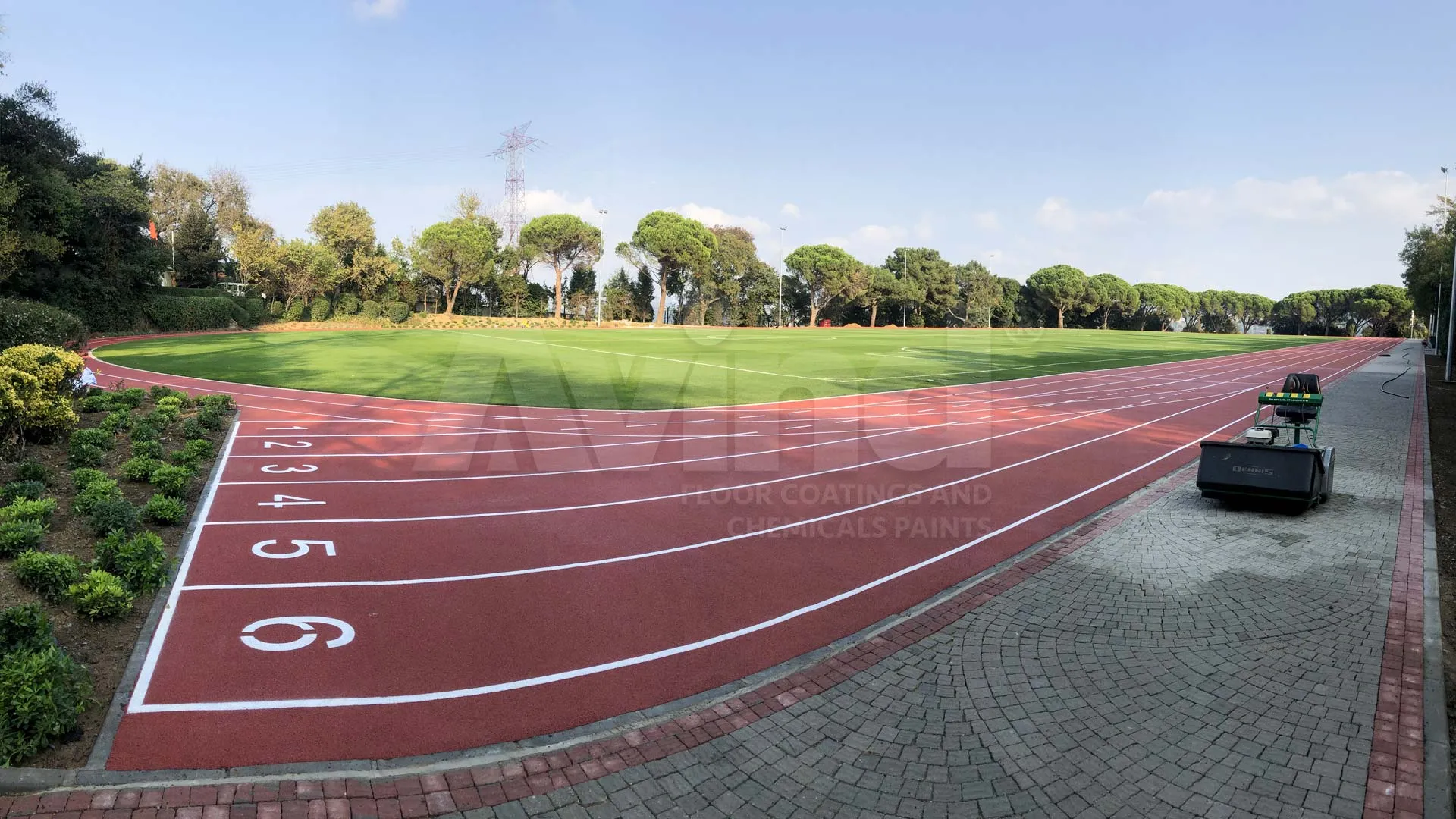
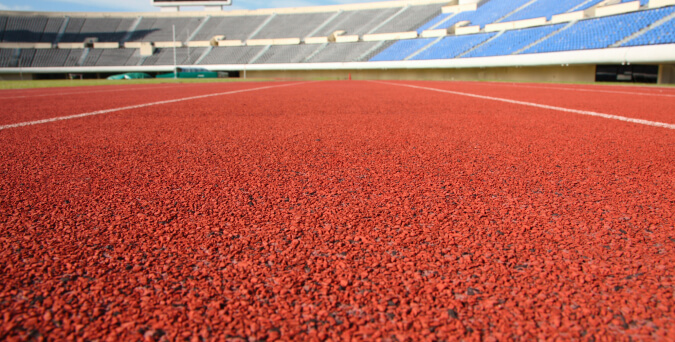
Athletics tracks and competition surfaces. The signature colour of a running track has to survive a decade of direct sun. Only a pigmented, UV-stable granule can deliver that.
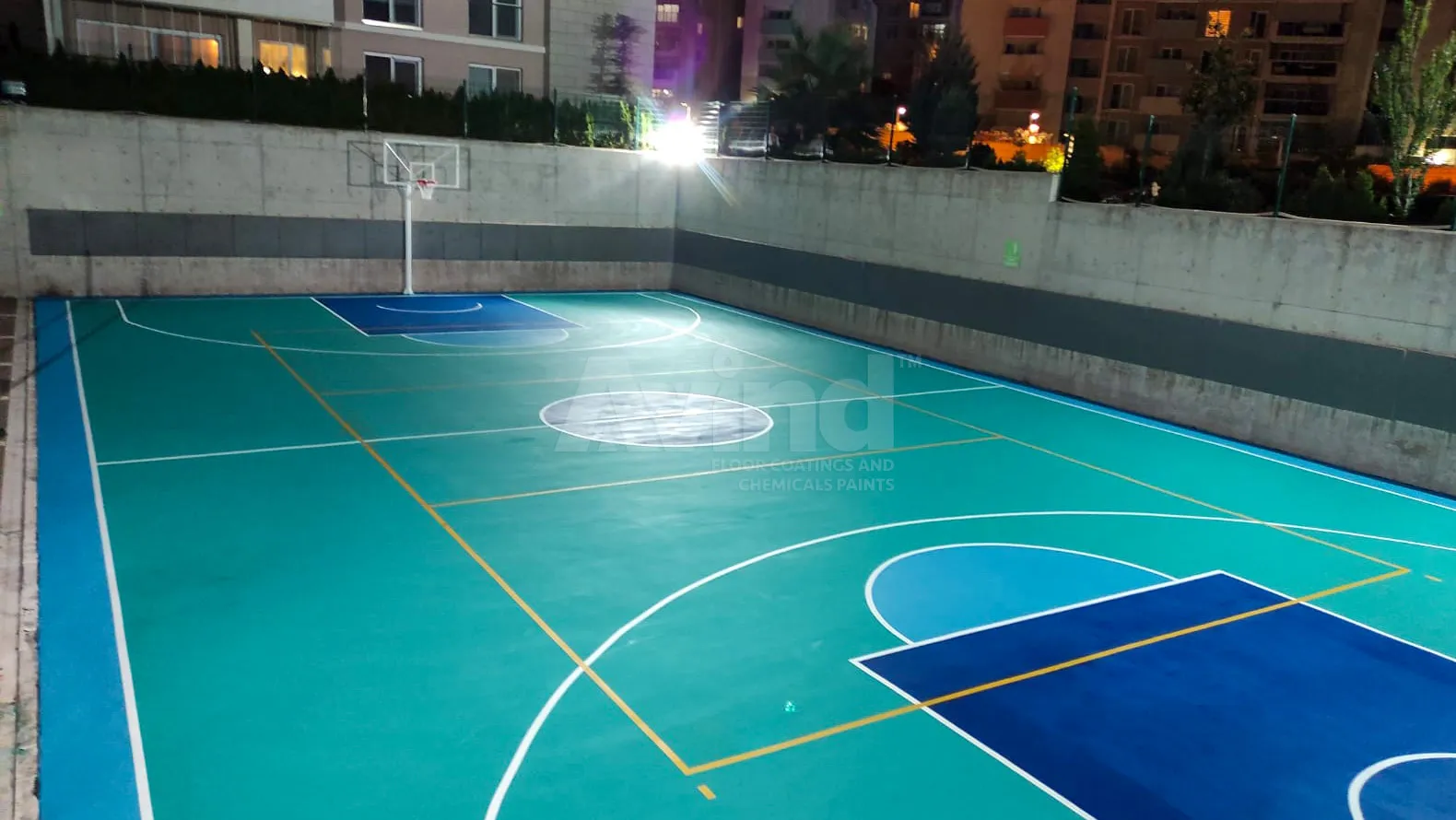
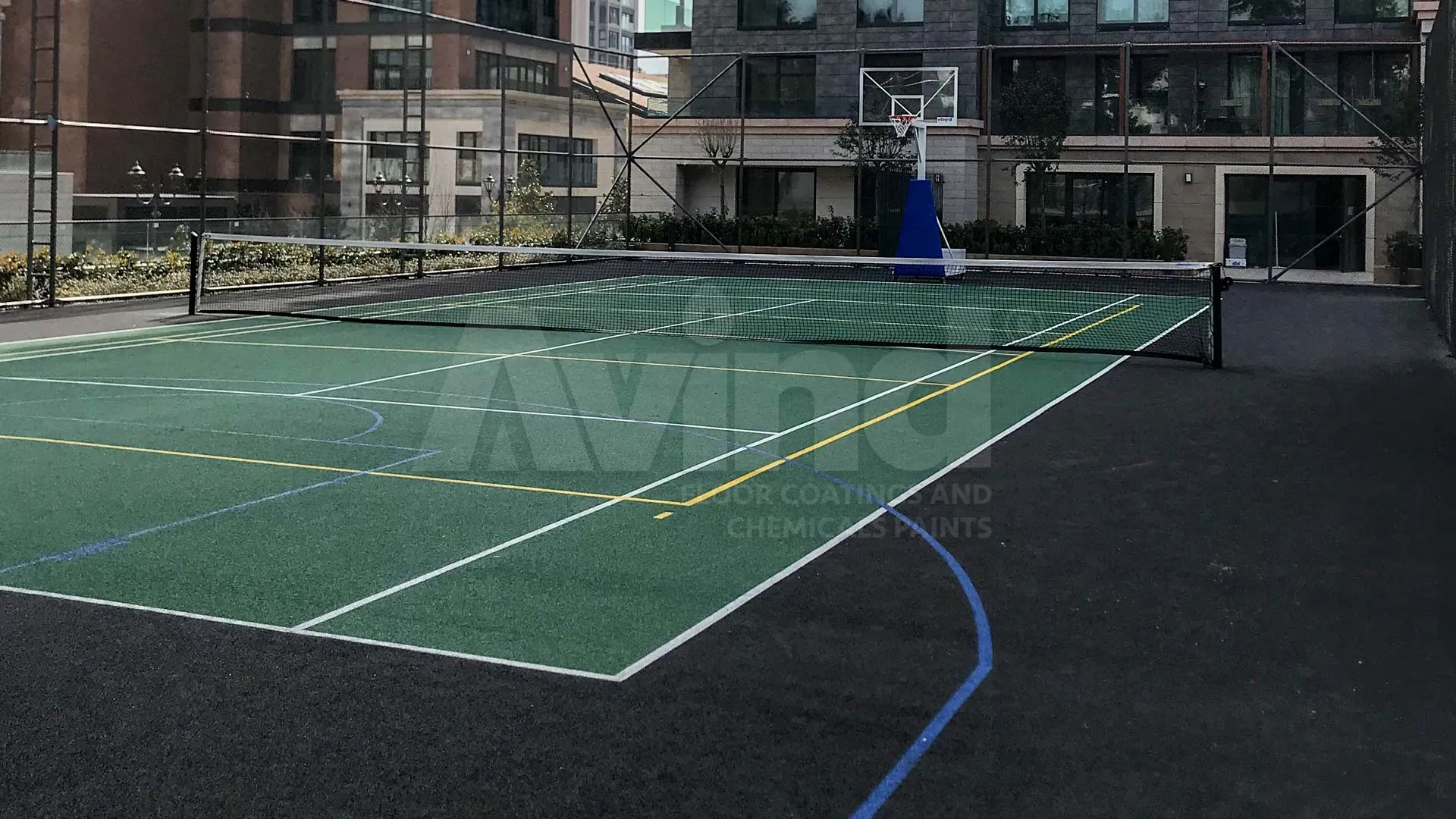
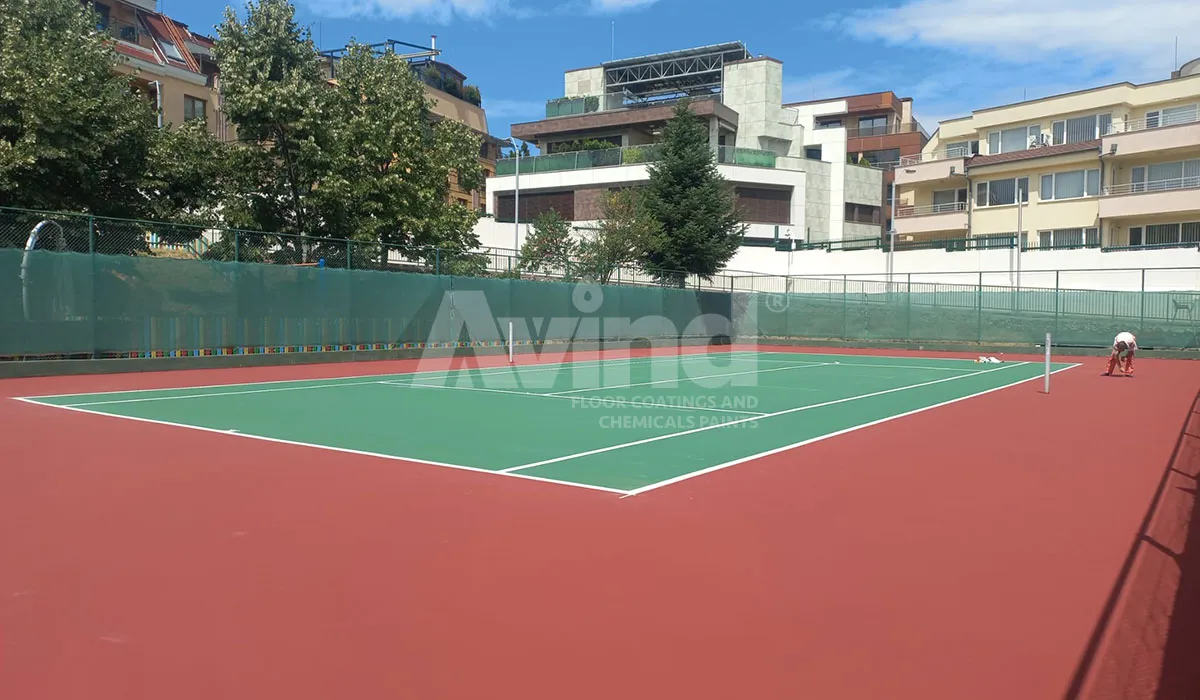
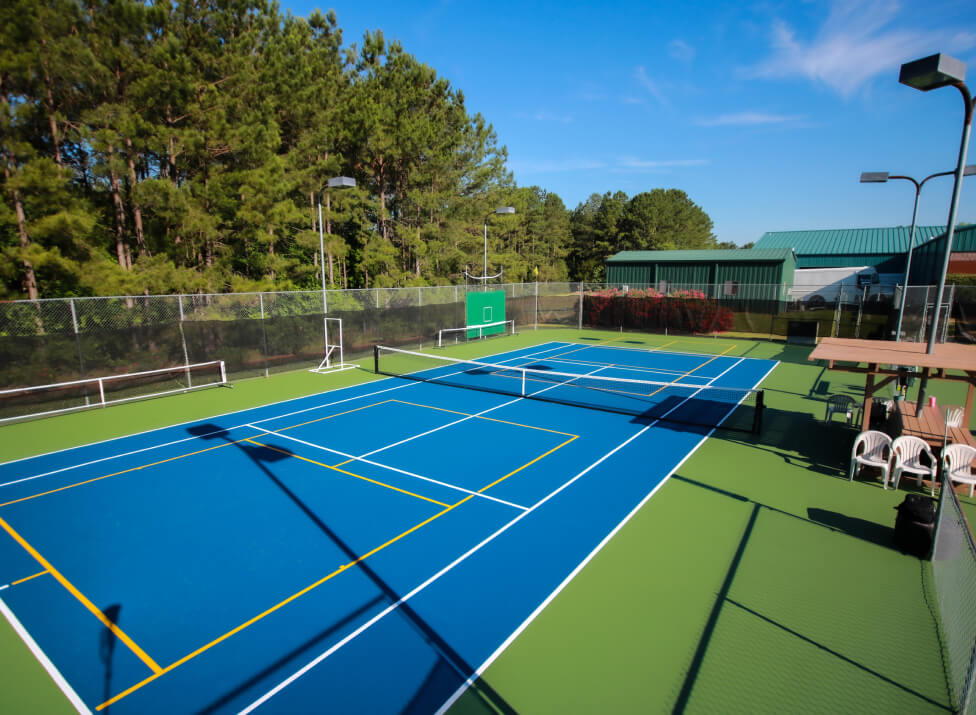
Multipurpose courts and tennis courts. Where line marking, contrast zones and brand colours matter to how the facility is perceived, EPDM is the only sensible wearing course.
Playgrounds · Athletic Tracks · Multipurpose Fields
The Hybrid Approach: Why Most Professional Surfaces Use Both
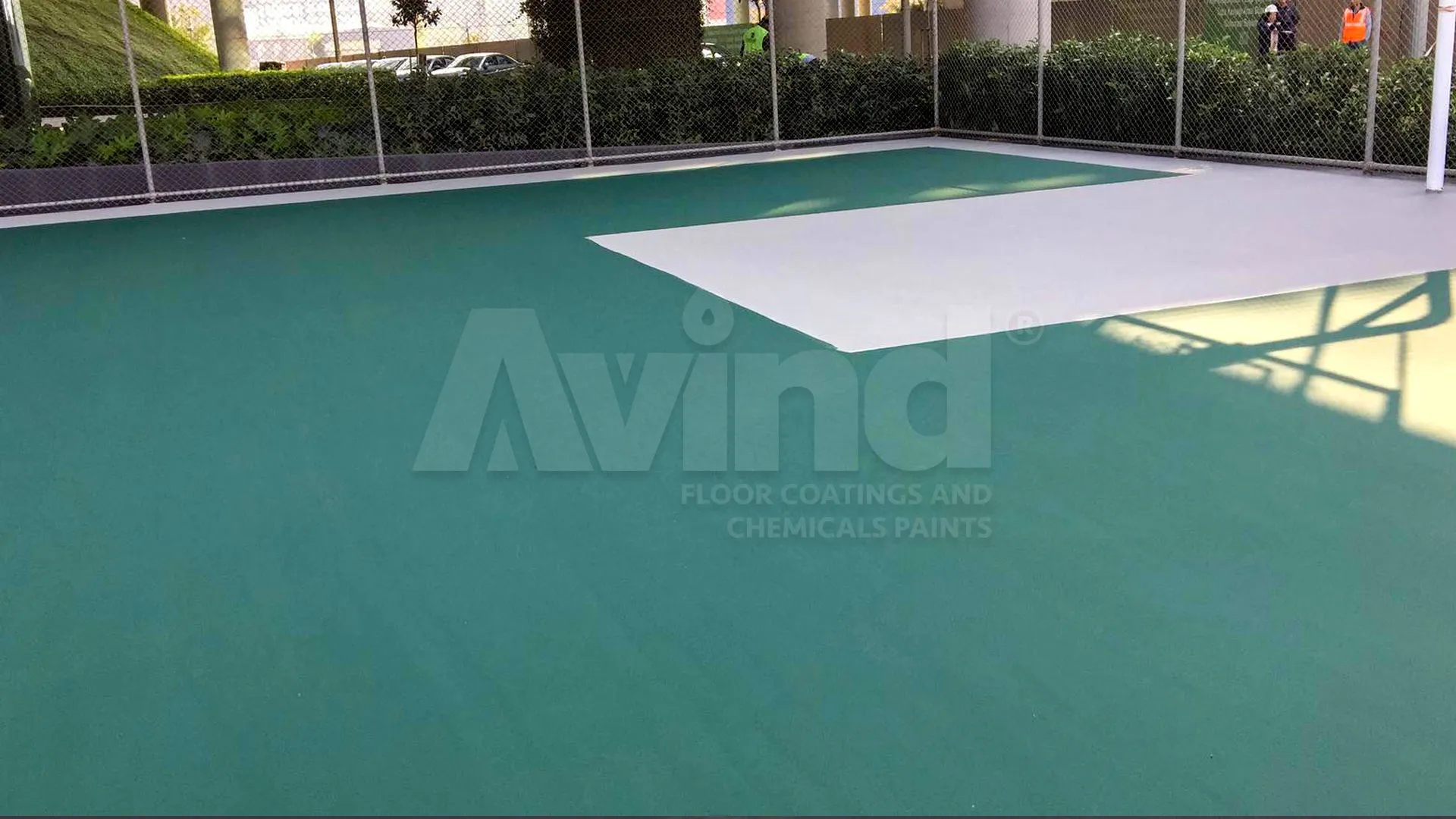
In practice, the EPDM-versus-SBR question is often answered with “both.” The sandwich system — the most widely specified construction for outdoor athletic surfaces — places a thick SBR elastic layer bound with polyurethane at the bottom, then finishes it with a thinner EPDM wearing course, either wet-poured or spray-applied.
The result is a surface that borrows the strengths of each material and cancels out their weaknesses. The SBR base provides depth of shock absorption where it is cheapest to provide it. The EPDM top provides colour, UV stability and abrasion resistance where it is actually needed. Total material cost drops significantly against an all-EPDM build-up, with no meaningful loss in performance or lifespan.
A note on the binder: the polyurethane binder matters as much as the granule. Aromatic PU binders are economical but yellow under UV; aliphatic binders hold their clarity outdoors. Specifying premium EPDM with a low-grade binder undermines the entire investment.
Avind 2L - Tartan Surface · Avind PU Binder

Which One Fits Your Project?
Work through these four questions in order:
- Is the surface exposed to direct sunlight? If yes, the wearing course must be EPDM. If no, SBR is viable throughout.
- Does colour matter to the facility? Lane markings, sport zoning, playground design and institutional branding all require pigmented EPDM.
- What performance standard applies? Outdoor synthetic sports surfaces are assessed under EN 14877; playground impact attenuation and critical fall height under EN 1177; indoor multi-sport surfaces under EN 14904. Confirm the target standard before fixing layer thicknesses.
- What is the whole-life cost, not the tender price? An all-SBR outdoor surface is cheaper to build and more expensive to own. A hybrid build-up usually delivers the lowest cost per year of service.
Specify With Confidence
Avind manufactures both EPDM and SBR granules alongside the polyurethane binders that bond them, which means the full system — base layer, binder and wearing course — is engineered to work together rather than assembled from unmatched components. Our surfaces are installed in more than 90 countries, from stadium renovations to school sports halls and industrial facilities.
If you are at the specification stage and weighing materials for an upcoming project, our technical team can review your site conditions, intended use and target standard, and recommend the build-up that fits.
Avind News
Integral is entering a new era with its renewed brand identity and future-focused strategy. While preserving the values and experience it has developed over the years, the company aims to advance its international projects, strengthen collaborations and create long-term value.
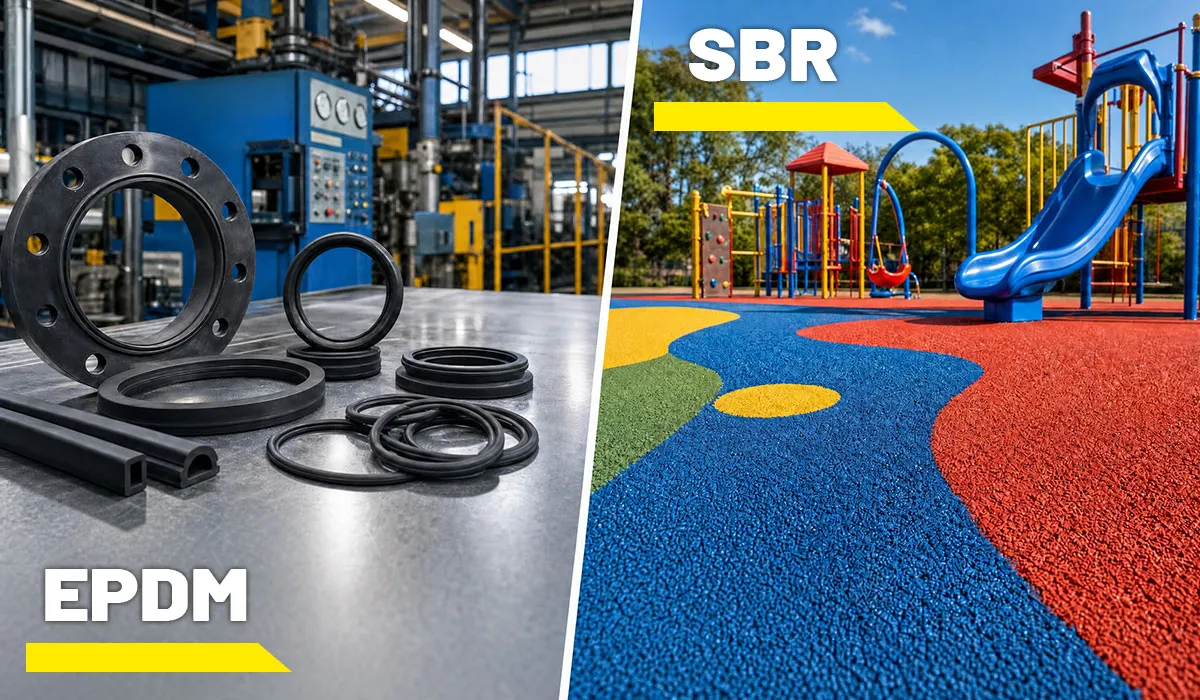
SBR and EPDM look alike in a bucket but behave very differently on site. This guide compares durability, UV resistance, colour retention and cost so you can specify the right rubber granule for your sports facility.
Modern athletics track projects are no longer just about marking lanes on a flat surface. Performance, athlete safety, durability, and long-term maintenance costs all depend on choosing the right surface system. For this reason, athletics track construction requires both technical knowledge and a clear understanding of different track surface technologies.
When it comes to designing and building tennis courts, enthusiasts and professionals alike have a wide array of options to choose from. One of the most beloved surfaces among top-tier players is the clay tennis court, known for its unique playing conditions. If you're considering constructing a clay tennis court, whether for a personal project or as part of a larger sporting facility, this guide will take you through everything you need to know.